
Icons
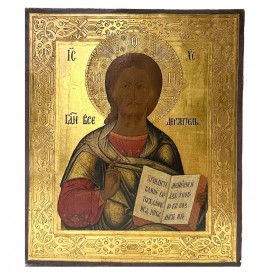
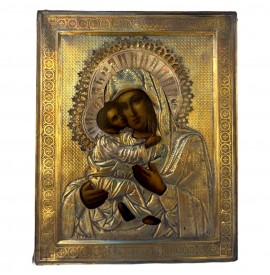
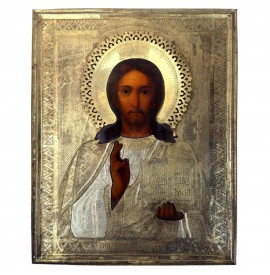
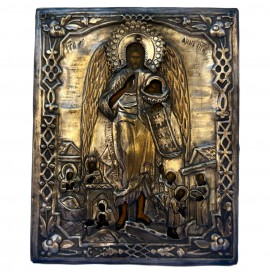
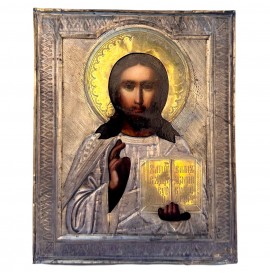
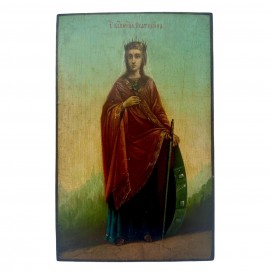
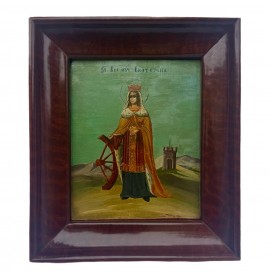
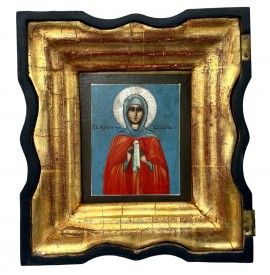
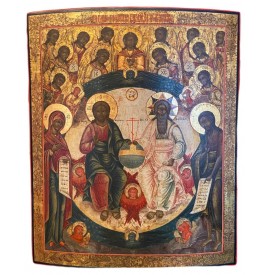
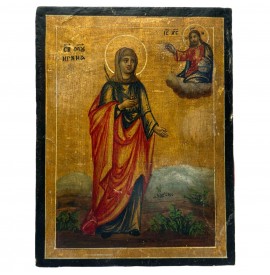
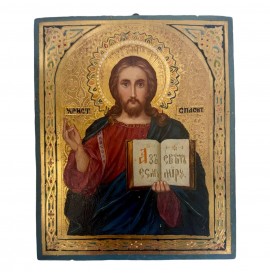
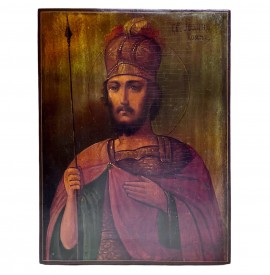
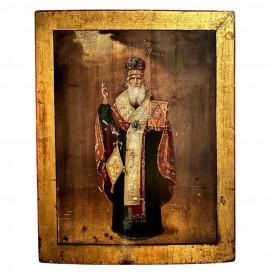
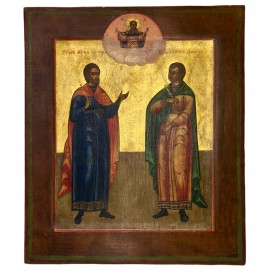
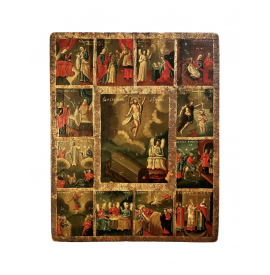
The word "icon" in translation from Greek means "image". During the formation of Christian art in Byzantium, this word denoted images of the Savior, the Mother of God, saints, angels or events of the Sacred History, regardless of whether it was sculptural, monumental painting or easel. Now the word "icon" is applied to the image of prayer.
From the first centuries of the Christian Church, persecuted and persecuted at this time, many conventional or symbolic images have come down to us, but there are very few clear and direct ones on the contrary.
This happened because Christians were afraid to betray themselves with these images to pagans (at the time of the birth of the idea of Christianity, the preachers of this religion and its attributes were severely persecuted by the pagans), and also because many Christians themselves were against direct images of God, angels and saints.
Most of all, the ancient symbolic images of Jesus Christ as a good shepherd have come down to us. Drawings were made on the walls of underground caves-tombs, on tombs, vessels, lamps, rings and other objects; they are found in all countries of the Christian world.
The oldest images of a good shepherd are found in the catacombs of Rome. In these underground caves, Christians fled from the pagans and performed divine services.
 In the underground cemetery Yermiya, the first paintings were found, with which, probably, icon painting began. There are images of a good shepherd healing a "demon-possessed youth", Jonah cast ashore by Kit and others. In the catacomb of Marcellinus and Peter there is an image of the adoration of the Magi to the Divine Infant held by the Blessed Virgin.
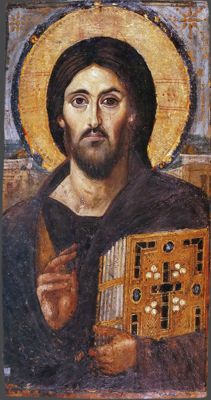
The icon received its development and wide distribution in Byzantium. Byzantine icon painters managed to create a visible image of the Almighty and show him to the world. The oldest icons that have come down to us date back to the 6th century and are made using the encaustic technique on a wooden basis, which makes them related to Egyptian-Hellenistic art. The most famous icons of this period, called the pre-iconoclastic one, are "Christ Pantokrator" and "Apostle Peter".
At the beginning of the eighth century, Leo III the Isaurian ascended the throne of the Greek Empire. After 10 years of his reign, in 726, he issued a decree forbidding Christians to be thrown in prayers in front of the icons on the ground, and after that many icons were placed high so that it was impossible to kiss them. Five years later, he issued another decree, which ordered to completely stop honoring icons and remove them from public places. The popes, then independent of the Greek emperors, and the three eastern patriarchs: Alexandria, Antioch and Jerusalem, who were already under the rule of the Mohammedans, did not want to have spiritual or church communion with Constantinople, and although the Eastern Christians suffered under the yoke of the Mohammedans, they had the opportunity to fearlessly pray in front of the icons.
After about 60 years of persecution of icons in the Greek Empire. under the great-grandson of the first tsar, the iconoclast, Constantine VI, and his mother, Queen Irina, in 787, the Seventh Ecumenical Council was convened in the city of Nicaea, at which the veneration of icons was approved. 25 years after this decree, the Greek emperor Leo V the Armenian, who ascended the throne, again began a cruel persecution of icons, which continued under his successors; after this new thirty-year persecution, Queen Theodora restored the veneration of holy icons in her kingdom.
In the forties of the ninth century, the iconoclastic period ended, and icon painting traditions were given the opportunity to continue and develop.
At the same time, a new style in icon painting was born - the ascetic style. Samples of icons painted by Greek masters became the basis of this style. The peculiarities of this style are as follows: the icon painters tried to focus the viewer's attention on the face of the saint, therefore small details and "unnecessary" decorations were absent on the icons; the faces of the saints were completely devoid of emotions and feelings, they practically did not express anything; the main object of the whole image was huge eyes with a frozen gaze. A typical example of an icon from the Macedonian period is two icons of Our Lady of Hodegetria, which have survived to our time.
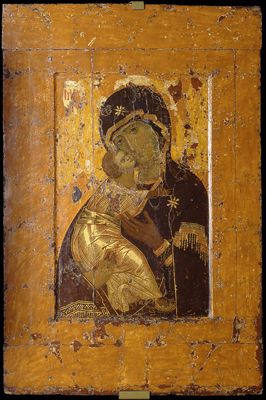 The next period is characterized by a change in style. Icon painters returned to the antique style again, leaving the ascetic one. Images on icons take shape. The faces of the saints become more alive and have individual features. The clothes of the saints are well drawn. The most striking examples are: "The Vladimir Icon of the Mother of God", painted in Constantinople; mosaic icon "Christ Pantokrator the Merciful"; icon "Gregory the Wonderworker".
At the very beginning of the XIII century, the center of Byzantium, Constantinople, was plundered and destroyed by the knights-crusaders. For some time the icon-painting workshops stopped their work. Nevertheless, the tragic events could not stop the development of icon painting, on the contrary, a new type of Byzantine icon was formed - hagiographic icons, that is, depicting scenes from the lives of saints. Until that time, pictures of the lives of the saints were depicted exclusively on the pages of church books. In the first decade, scenes from the lives were depicted on the icons of the saint. The face of the saint was placed in the center of the icon, and around, along the perimeter, pictures from his life. Vivid examples of hagiographic icons are the icon of St. Nicholas and the icon of St. Catherine.
Following the spread of Christianity, original schools of icon painting arose in Coptic Egypt and Ethiopia, in the South Slavic countries, in Georgia. An ancient Russian icon acquired a real artistic brightness and originality.
The art of icon painting came to Russia from Byzantium after the Kievites were baptized in 988 under Prince Vladimir Svyatoslavich. Together with Christianity, Russia also received the achievements of Byzantine culture. Although Christian churches existed in Kiev before, it was after 988 that the construction of the first stone church in Kiev, called Desyatinnaya, began. The construction and interior painting of the church was carried out by invited Byzantine craftsmen. The tithe church has not survived, but archaeological finds suggest that the most important parts of its painting were made using the mosaic technique, and the rest of the temple was decorated with frescoes.
The most famous ensemble of this period in Kiev are the mosaics and frescoes of the St. Sophia Cathedral, built in the XI century by Yaroslav the Wise. The painting program of the temple corresponded to the Byzantine tradition, but contained a number of peculiarities. For example, in the drum of the central dome, 12 apostles were depicted, expressing the idea of preaching Christianity to all ends of the world. The cycle of evangelical events was very detailed for the 11th century, and on the western wall there was only a partially preserved portrait of the family of Prince Yaroslav. The main dome and altar were decorated with mosaics, of which the image of Christ Pantokrator at the zenith of the dome and the Virgin of Oranta in the vault of the altar are well preserved. The rest of the interior was painted with frescoes. The style of both mosaics and frescoes exactly matches the peculiarities of Byzantine art of the first half of the 11th century, that is, the ascetic style.
For ancient Russian art, the construction and painting of the Assumption Cathedral in the Kiev-Pechersky Monastery played an important role. The works were carried out by masters of Constantinople in 1073-1089. The ancient painting, and then the very building of the cathedral, perished. However, a description made in the 17th century has survived, from which the main content of the painting is clear. The cathedral itself served as a model for the construction of cathedrals in other cities of Russia, and the iconography of its frescoes was repeated and influenced icon painting. The icon painters who completed the painting remained in the monastery, where they founded an icon painting school. The first famous Russian icon painters, the Monks Alipy and Gregory, emerged from it.
The entire pre-Mongol period continued to actively invite Greek icon painters. It is still very difficult to distinguish between their works and the works of the first Russian masters. Murals and icons are mostly similar to contemporary trends in Byzantine icon painting.
The oldest icons in Russia have been preserved in Veliky Novgorod.
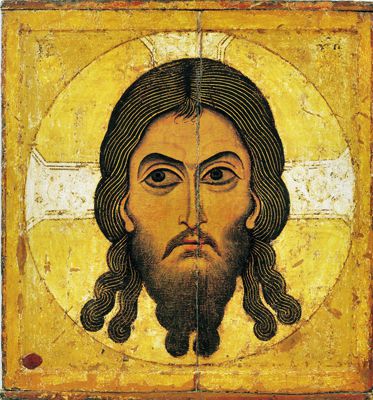 Several huge icons, which were part of the most ancient decoration of the temple, originate from the St. Sophia Cathedral. The icon "Savior Golden Robe", depicting Christ on the throne in golden robes, is currently in the Assumption Cathedral in Moscow, but only 17th century paintings have survived on it. Much better preserved is the icon of the Apostles Peter and Paul, kept in the Novgorod Museum along with its ancient setting. Unusual for Byzantine art is the gigantic size of the icons intended for the huge temple. Another icon located in the Dormition Cathedral in Moscow is double-sided, with the image of the Mother of God Hodegetria and the Great Martyr George.
At the end of the 12th century, the icon "Savior Not Made by Hands" was created with the image on the back of the worship of the cross. The majestic face of Christ is filled with precise drawing and soft, smooth modeling, on the contrary, the turn of the icon with the figures of worshiping angels amazes with the expressiveness of the style.
The icon of St. Nicholas was also created at the very end of the century and combines monumentality with mannerism of the features of the face. This is the most Byzantinized icon of Novgorod at that time. On the margins of the icon there are images of saints; this will become a widespread Novgorod tradition.
A special lyricism and subtle emotionality is characteristic of the image of the Archangel Gabriel from the main icon, called the "Angel of the Golden Hair", which was once part of the Deesis tier.
By the end of the XII century, Kiev is losing its former significance, and North-Eastern Russia at the beginning of the XIII century, on the contrary, is at the stage of its highest prosperity. Its center was Vladimir, a large icon-painting workshop worked at the episcopal court in the ancient city of Rostov, other cities, for example Yaroslavl, also became art centers. In Yaroslavl in 1210-1220. the city's Assumption Cathedral and the Transfiguration Cathedral of the Spassky Monastery are under construction. For the last of them, a huge magnificent icon called "Yaroslavl Oranta" is being painted. The image has a complex iconographic content. The Mother of God is presented full-length, frontally like an Oranta, that is, with her hands raised in prayer. On the breast of the Mother of God is a medallion with the image of the Savior Emmanuel, blessing as a bishop with two hands. In the upper corners of the icon there are two medallions with archangels in court vestments.
The ruin of Russia by Batu in 1237-40. had a strong influence on the development of icon painting. The southern and western Russian principalities were severely ruined and eventually became part of Lithuania. The political and ecclesiastical center finally shifted to northeastern Russia. In 1299, Metropolitan Maxim moved his see from Kiev to Vladimir on the Klyazma. Although the northeast was severely ruined, by the end of the century artistic life began to revive here, an icon-painting workshop functioned in Rostov. Novgorod and Pskov were not affected by the Mongol invasion, but it strongly influenced the development of their culture.
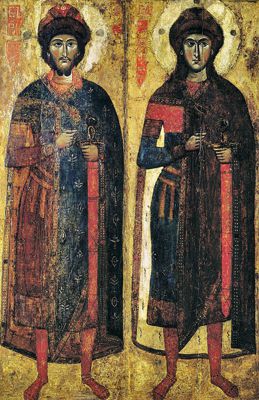 A number of icons originating from different places and attributed to the middle of the century show how Russian icon painting changed under the influence of a new historical situation. The harmony inherent in Byzantine works is leaving the icons. Writing techniques are preserved and simplified.
Such is the icon of Saints Boris and Gleb. The icon can be Novgorod or Tver and was created towards the end of the XIII century. In it, the legacy of the previous time is still more felt.
Unusual is the huge temple icon of St. Nicholas the Wonderworker from the Church of St. Nicholas on Lipno. The inscription on the bottom of the icon mentions the name of the icon painter - Alex Petrov and the year the icon was created - 1294. The saint is depicted up to the waist surrounded by many saints in the fields. The figure of the saint is written flat, but the face is carefully worked out with subtle tonal transitions. The abundance of ornaments on clothes and a halo is surprising. In addition, the icon feels a connection with Western European tradition. Novgorod really had a lot of contacts with neighboring European countries.
From the beginning of the XIV century, Russian cities again began to maintain active ties with Byzantium. The resulting new influence of her culture caused a peculiar response in Russian icon painting in the second half of the century.
In northeastern Russia, the former significance of Rostov was preserved. Already from the end of the XIII century, Tver was actively developing, but in the first quarter of the XIV century, Moscow took the lead, which since 1325 became the seat of the Russian Metropolitan.
In the Assumption Cathedral in Moscow, there is a large shoulder icon of the Savior from the first third of the century. There is a noticeable Byzantine influence in it, especially in the smooth modeling of the face with glancing light. Russian features appeared in chiseled, somewhat schematic forms. The image, which is characteristic of Russian icon painting, has a greater openness, which is combined here with Byzantine contemplation. Later, the second, stored here, the shoulder icon of Christ - "Savior the Bright Eye", was created. She is distinguished by a particular dramatic tension caused by the sharp wrinkles of the forehead and the contrasts of thick shadows and bright flashes of light.
Icon painting at the end of the 14th century paved the way for the flourishing of Russian icon painting at the beginning of the 15th century and gave birth to the genius of Andrei Rublev. During this period, it was in Moscow that the artistic life of Russia was concentrated. Numerous masters and no less numerous visitors work here: Greeks, Serbs, etc. Theophanes the Greek works in Moscow at the end of his life. The latter was the greatest Novgorod master and teacher of icon painting of the XIV century. The icons of Theophanes the Greek amaze with their grandeur, the faces of the saints depicted by him are severe and brilliant in every stroke.
In 1343 Greek masters "signed" the cathedral church of the Assumption of the Virgin in Moscow. Theophanes the Greek painted the Church of the Archangel Michael in 1399, and in 1405. - Cathedral of the Annunciation with his student Andrei Rublev.
Speaking about the Russian icon, it is impossible not to mention the name of Andrei Rublev. His name has been preserved in the people's memory. He was often associated with works of different times, when they wanted to emphasize their extraordinary historical or artistic significance.
Andrei Rublev and under his leadership painted many churches, and also painted a number of deesis, festive and prophetic icons.
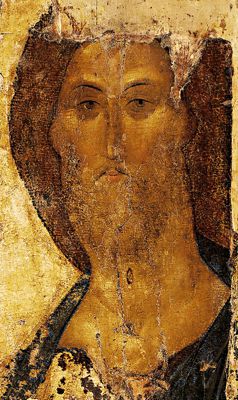 At the beginning of the 15th century, the most ancient monument of the pre-Mongol era, erected in the second half of the 12th century, but ravaged and burned out by the Horde conquerors, the Vladimir Assumption Cathedral, was in need of restoration. The Moscow prince Vasily Dmitrievich, a representative of the branch of the Vladimir princes, descendants of the Monomakhs, undertook the renovation of the Assumption Cathedral as a natural and necessary act associated with the revival after the victory in the Kulikovo field of the spiritual and cultural traditions of Russia, the era of national independence. From the works of A. Rublyov in the Assumption Cathedral, icons of the iconostasis have survived to this day, making up a single ensemble with frescoes, partially preserved on the walls of the temple.
The next most important work of A. Rublyov was the so-called Zvenigorod rite, one of the most beautiful icon ensembles of Rublev's painting. The rite consists of three half-length icons: the Savior, the Archangel Michael and the Apostle Paul. They come from the Moscow region of Zvenigorod, in the past the central appanage principality. Three large-sized icons were probably once part of the seven-figure Deesis. In accordance with the established tradition, the Mother of God and John the Baptist were located on the sides of the Savior, the icon of the Archangel Gabriel corresponded to the icon of the Archangel Michael on the right, and the icon of the Apostle Peter should have been paired with the icon of the Apostle Paul.
In the Zvenigorod rank, Rublev appears as an established master who reached the heights on the path, an important stage in which was painting in 1408 in the Assumption Cathedral in Vladimir.
In the twenties of the 15th century, an artel of masters, led by Andrei Rublev and Daniil Cherny, adorned the Trinity Cathedral in the monastery of St. Sergius of Radonezh with icons, erected over his grave. The Trinity icon was included in the iconostasis of the Trinity Cathedral as a highly revered temple image. Its plot is based on a biblical story about the appearance of a deity to righteous Abraham in the form of three beautiful young angels.
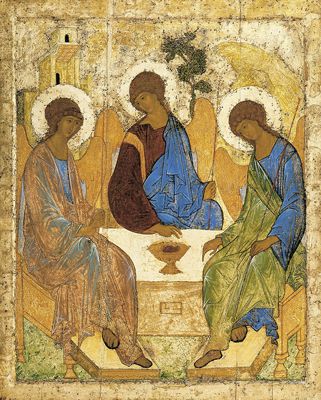 Researchers emphasize the symbolic cosmological meaning of the compositional circle, into which the image is laconic and natural. In the circle they see the reflection of the idea of the Universe, the world, unity, which embraces the plurality, the cosmos.
The era of Rublev was the era of the revival of faith in man, in his moral strength, in his ability to sacrifice himself in the name of lofty ideals.
The successor to the traditions of Andrei Rublev was the leading Moscow icon painter Dionisy. Quite a lot of works of art are known, the authorship of Dionysius of which is documented, or attributed to Dionysius himself or his entourage. The body of plots developed by Dionysius and his followers differs from the themes of the works of the times of Andrei Rublev, which is associated with the development of modern religious thought. In the legacy of Dionysius, the most important is the image of the Mother of God. The image of Our Lady-Hodegetria (Guidebook), starting with the Hodegetria for the Ascension Monastery, in his work was replaced by the private, confessional iconographic type "Tenderness", which was popular until the second half of the 15th century, to which such masters as Theophan the Greek and Andrei Rublev turned.
At the end of the 16th century, two directions existed in parallel, conventionally called the "Godunov school" and the "Stroganov school". Both of them are represented by the work of tsarist masters, but the "Godunov school" is characterized by somewhat cold representativeness and monumentality (the iconostasis and paintings of the Cathedral of the Smolensk Icon of Our Lady of the Novodevichy Monastery), and the "Stroganov" school is characterized by the intimacy, subtlety and diminutiveness of painting.
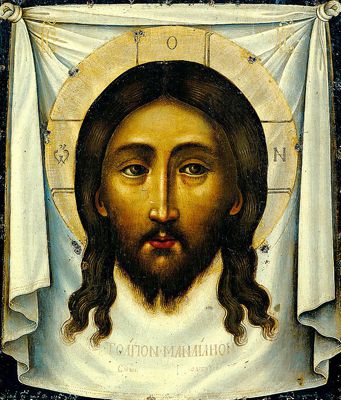 Elements of a kind of realism that can be observed in the Stroganoff school were developed in the work of the most significant easel masters of this century - the royal isographers of the Armory. Their head, Simon Ushakov, composed in 1667 "A Word to the Lovers of Icon Writing", in which he outlined his views on the tasks of painting, essentially leading to a break with the iconographic tradition of the previous era. In his icons, he destroys the plane, makes the depth of perspective palpable, reveals too bodily volume in the figures, accessories are too “realistic”. The most successful are his works, where the main role is played by the human face, especially the icons of the "Savior Not Made by Hands" type.
Since the 17th century icon-painting art has been characterized by "secularization", the destruction of icon-painting, iconographic canons. The reassessment of values that took place in all spheres of Russian culture of this period contributed to the emergence of a new view of the world. There was a desire to display everyday life, the beauty of nature, a real person. The subject of images is increasing: the number of secular (historical) subjects is growing, Western engravings are used as samples. Art is gradually being freed from the power of iconographic canons. The methods of icon painting and mural painting, which are distinguished by external reliability in the transmission of the material world, began to be called the Fryazi script. The most detailed criticism of the Fryazh writing as incompatible with the lofty spiritual aspirations of the Orthodox faith was given by the Old Believers. The Old Believer icon continues the traditions of the Old Russian icon. There were several large schools of Old Believer icons: Vetkovskaya, Nevyanskaya, Pomorskaya, Syzran and Siberian. The Old Believers' icons do not depict new saints, canonized by the Russian Orthodox Church after the schism, new images of the Mother of God and new versions of traditional subjects.
At the beginning of the 18th century, several more icon-painting centers began to develop in Russia: Palekh, Mstera and Kholui. The iconography of these villages was called "Suzdal" because before the establishment of the provinces (1778) they were located in the Suzdal diocese. "Suzdal" icon craft of the 17th - early 20th centuries. had no direct relation to the ancient Vladimir-Suzdal icon-painting school.
 The Mstera masters in writing technique were the most consistent successors of the old traditions. They deliberately tried to adhere to the basic algorithm of techniques characteristic of Russian icon painting of the "classical" period, that is, the 15th - early 17th centuries.
The style of Palekh icon painting is based on the traditions of the ancient Uzdal school and some features of the Moscow icon painting of the 15th-16th centuries. The Palekh icon is characterized by soft smooth lines and restrained harmonious colors.
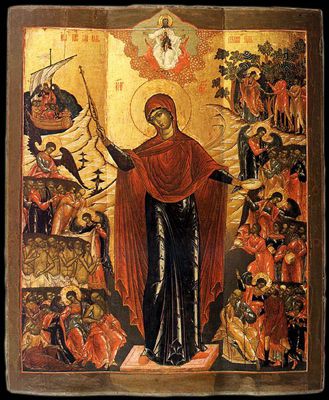
One of the earliest examples of the Palekh style is the Joy of All Who Sorrow icon of the early 18th century. Its multi-figured composition is strict and laconic.
Kholui differs from the two above-mentioned centers in that the Trinity-Sergius Monastery is located there, and he, being the main customer, in turn, strictly monitored the quality of the painting of icons, demanded that the icon-painting images, approved by the cathedral of 1551, be followed by the images of A. Rublev.
A feature of the Kholuy icon painting was the rich bright colors corresponding to the area of the village, the simplicity of the clothes of the saints - they wrote them understandable for the people, as they were during their lifetime, without frills.
The Ukrainian icon crystallized its own style, taking its origins in Byzantine art and being influenced by Western European painting. Without violating traditional iconography, established compositional schemes and structures, the artists seemed to open a window into the living and real world. More and more often, elements of life impressions penetrate into the icon: elements of the local landscape, genre scenes with observations of a specific environment. All this testifies to the artists' interest in the surrounding reality, which inevitably led to changes in the traditional language of icon painting. Through the baroque that prevailed in the countries of Western Europe, Ukraine is being introduced into the Western European artistic process. The spirit of the baroque, with its magnificent festivity and luscious dynamic forms, responded to the optimistic moods that prevailed in society.
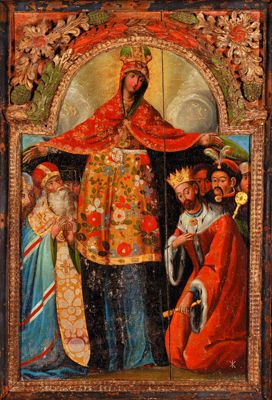 The western orientation of Ukrainian art is traced in the interpretation of such traditional subjects as "Pokrova". The Icon of the Intercession with Bohdan Khmelnitsky is a special historical symbol.
In the first half of the 18th century, professionally painted images were still preferred in Russia, artistically continuing the "Armory Chamber style" with a combination of medieval and new pictorial techniques. The volume in these images was modeled very restrainedly, the color was highly decorative, gold spaces were widely used, which is why icons of this direction were called “gold-blank”. The manner of "gold-blank writing" in the 18th-19th centuries. was considered ancient, "Greek Orthodox", its stylistic side was influenced by the Elizabethan baroque, but it turned out to be quite stable in relation to classicism.
In Russian icon painting of the 19th century. Three main directions can be traced, corresponding to the needs, social status and level of consciousness of the customers of the icons. A significant part of the volume of production was made up of cheap, so-called "common" or folk icons. They were purchased mainly by the peasant population and were painted in traditional iconography. Cheap icons, satisfying the peasants, did not correspond to the concept of the prototype for the representatives of the more well-to-do strata of society. The spread of secular painting contributed to the perception of the icon as a realistic portrait of a saint or as a document fixing this or that event in Sacred history, which created conditions for icon painting orders from artists, students of the Academy of Arts. Professional artists performed paintings for churches in the general mainstream of the stylistic development of post-Renaissance painting. The third direction in religious art has received great development in connection with the comprehension of the results of the Patriotic War of 1812, the rise of national consciousness and the increased public interest in Russian history and culture. Stylistically, this style of icon painting turned out to be very stable and was called by contemporaries "Greek Orthodox", "Byzantine" or "Old Russian". In the Russian language of the XIX century, these words were used as synonyms in relation to art.
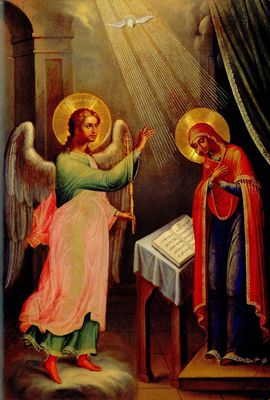 One of the most famous in Russia in the XIX century. was the St. Petersburg icon-painting workshop of the Peshekhonovs, founded by Makariy Samsonovich Peshekhonov. The Peshekhonovs' workshop carried out the most important orders in Russia and abroad. In 1856, Vasily Makarovich Peshekhonov, the founder's son, was awarded the title of Icon Painter of the Court of His Imperial Majesty by decree of Emperor Alexander II, and with it the right to use the State Emblem of Russia and the inscription "Privileged Master of the Court of His Imperial Majesty" on the sign of the workshop. As a court icon painter, Vasily Makarevich made life-size icons for high-born members of the imperial family, in particular, for the future emperor-passion-bearer Nicholas II.
Icon painters of the late 19th - early 20th centuries were inspired by the "disclosure" of ancient icons. After the restorers removed the late recordings and layers of yellowed dark linseed oil, the world recognized this window to the invisible world - the Russian icon in its original form. This determined the direction in icon-painting with the most strict adherence to the ancient forms of the icon, based on the revival of medieval aesthetics.
The end of the 19th century was marked by the arrival of the Art Nouveau style in the Russian icon, which turned out to be consonant with its artistic language with its characteristic features - a tendency towards flatness, open decorativeness in design, locality of color, symbolism of images. The beginning of this line was given by the icons painted and decorated by members of the "Abramtsevo" circle in the 80s, and, a little later, the frescoes they created when decorating churches. Some easily recognizable subject compositions of these paintings were widely used by many artists, including students of icon painting schools established by the Committee for the Trusteeship of Russian Icon Painting. In Russian religious "academic" painting, as in all Russian art, there is a dynamic process of creating its own national school. The artistic ideology of the national neoclassical Russian icon of the late 19th and early 20th centuries, the author of which is considered to be V.M. Vasnetsov, is clearly based on the belief in a special religious sense of beauty and bears the distinct influence of F.M. Dostoevsky, who declared beauty to be an absolute value in his novel "The Idiot".
In 1881-1882, at the estate of Savva Mamontov in Abramtsevo, according to the project of Viktor Vasnetsov, a unique Church of the Savior Image Not Made by Hands was built; such famous artists as Ilya Repin, Nikolai Nevrev, Mikhail Vrubel, Mark Antokolsky and other members of the Abramtsevo circle participated in the design of the interior decoration of the temple. The construction of an Orthodox church united the creative potential of outstanding authors, the result of which was the birth of the national-romantic direction of Russian Art Nouveau.
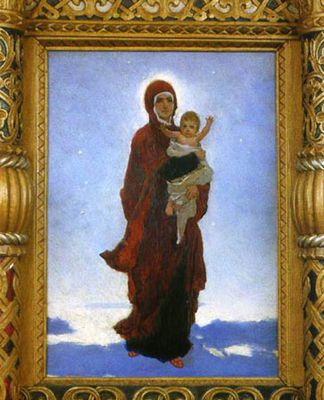 The church houses one of the most original and new pieces of art for Russian church art - the artistic iconostasis, which includes icons "The Savior Not Made by Hands" by Ilya Repin, "Nicholas the Wonderworker" by Nikolai Nevrev, "Sergius of Radonezh" and "Our Lady" by Viktor Vasnetsov, "Annunciation" by Vasily Polenov and others. 10 years later, Ilya Repin painted two more icons: "The Lord in the Crown of Thorns" and "The Mother of God with the Child."
In 1885, a famous historian and artist, professor of St. Petersburg University, Adrian Viktorovich Prakhov suggested that Viktor Vasnetsov paint icons and paint the main nave of the Vladimir Cathedral in Kiev. Brushes V.M. Vasnetsov owns 15 compositions and 30 individual figures. For the entire period of work, he painted more than 2 thousand square meters.
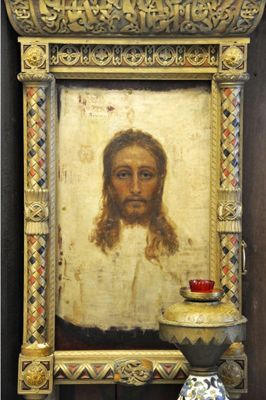 The painting of the cathedral, thanks to its high craftsmanship, extreme emotional intensity and accurate historical surroundings, has become an outstanding work of monumental art of the late 19th century.
The second person who came to Kiev at Prakhov's invitation was Mikhail Nesterov, who at that time was still young and little-known in artistic circles.
Mikhail Nesterov completed two paintings in the choir - "Nativity of Christ" and "Resurrection of Christ", "Theophany" - in the baptismal, depicted 16 figures on four iconostases of the lower and upper altars.
In 1884, among others, 28-